

Vietnam’s cashew sector is closing 2025 with volumes that look strong on paper, but the latest VINACAS figures reveal a market that is becoming more expensive, more selective, and structurally tighter beneath the surface.
November data confirms three parallel trends shaping the end of the year:
raw nut imports are rising sharply, average import prices remain elevated, and processors are operating in a far narrower margin environment than volumes alone would suggest.
Rather than signaling comfort, the data points to a market preparing defensively for 2026.
Imports Accelerate Again, but at a Higher Cost
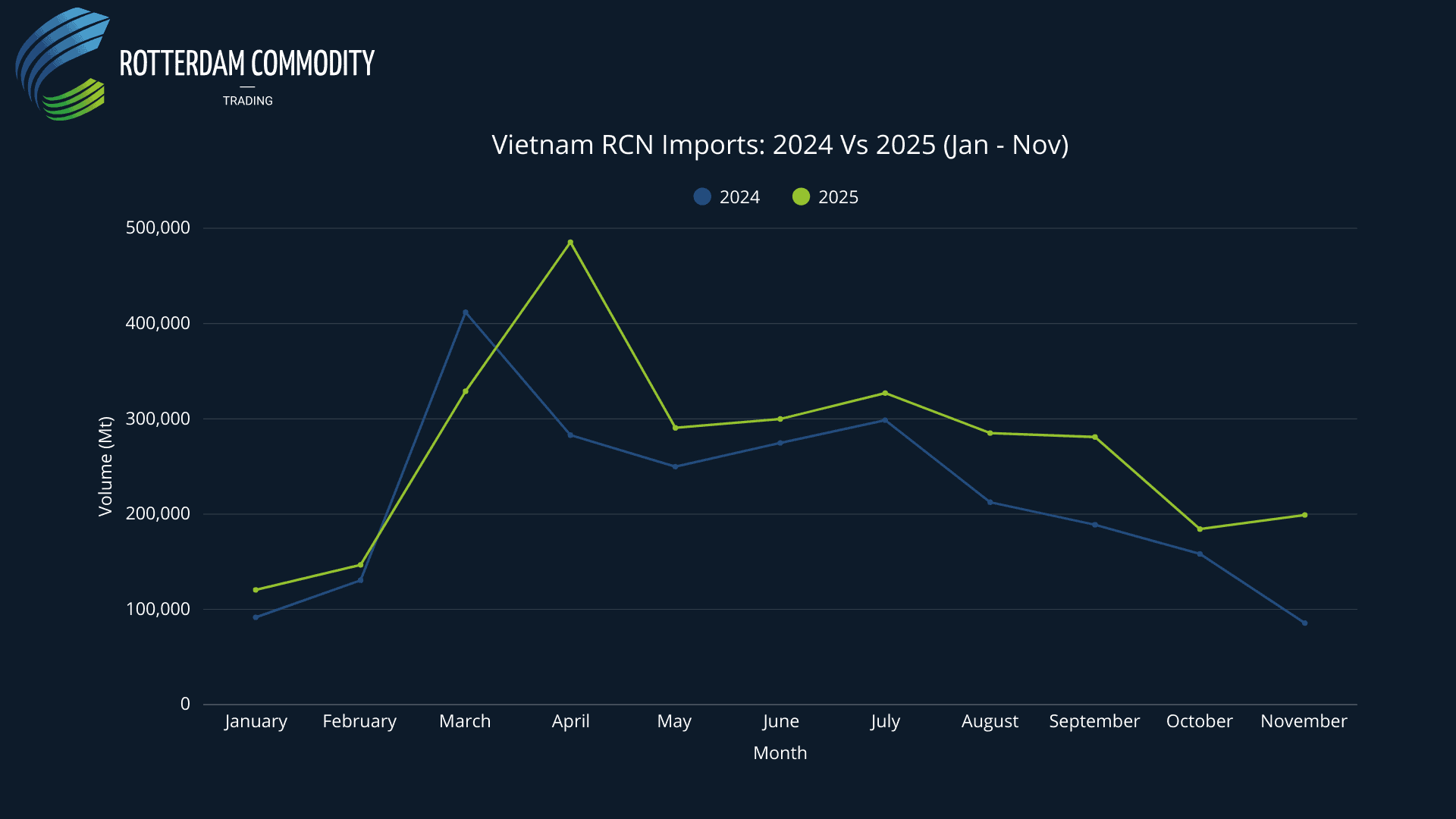
According to VINACAS, Vietnam imported 199,121 tons of raw cashew nuts (RCN) in November, more than double (+132.5% YoY) the volume seen in November 2024. Import value rose even faster, up +116.6% YoY, bringing the monthly bill to USD 287.5 million.
Yet the most telling figure is price.
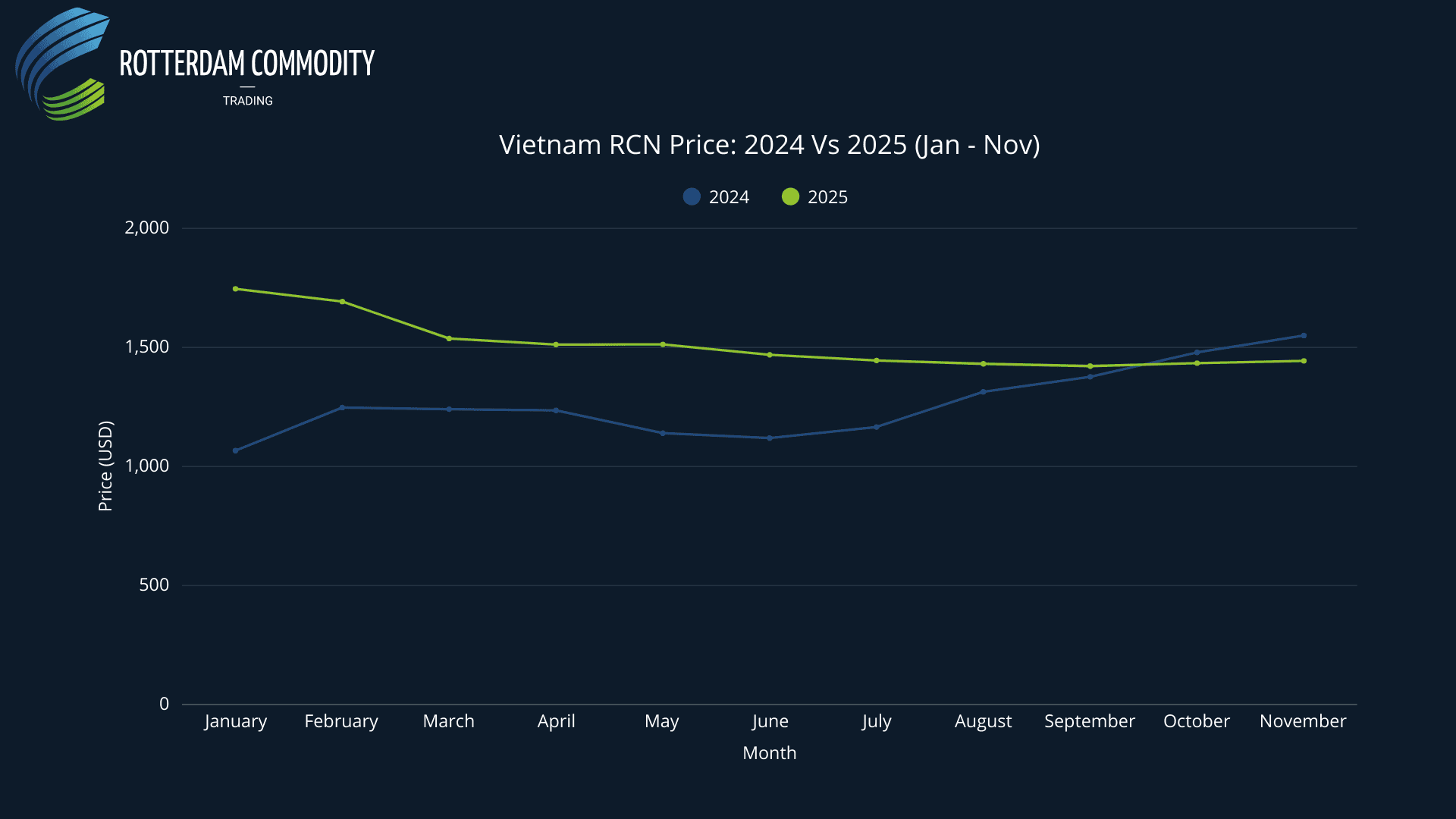
Average RCN import prices in November held at USD 1,444/ton, still well above historical norms, even though they eased slightly from mid-year peaks. On a year-to-date basis, Vietnam has now imported 2.95 million tons of RCN, up 23.6% YoY, while total import value surged +48.6% YoY.
In short: processors are buying more nuts, but paying significantly more per ton to secure supply.
Cambodia and Ivory Coast: Two Very Different Supply Stories
The November breakdown highlights how uneven Vietnam’s sourcing landscape has become.
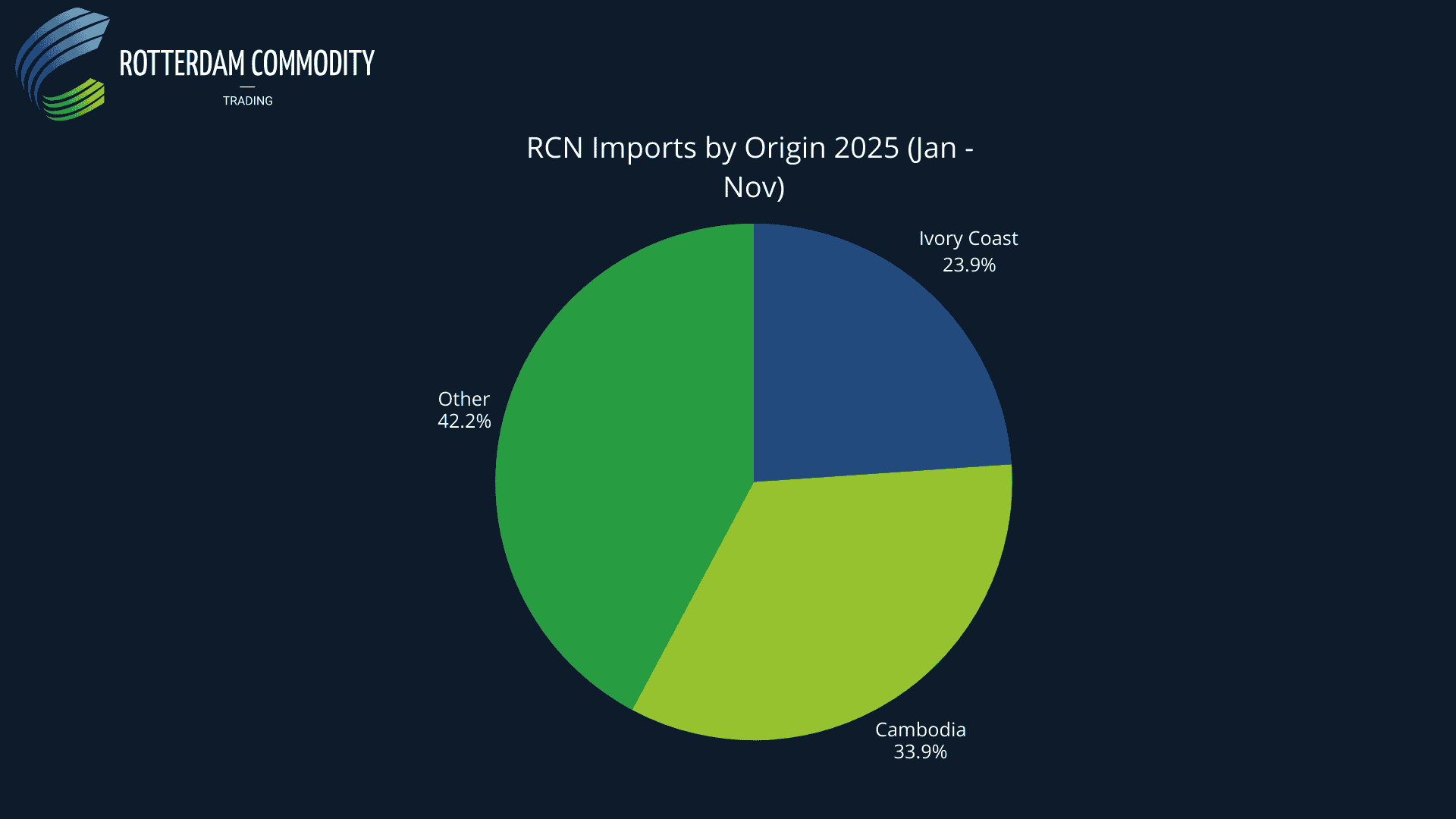
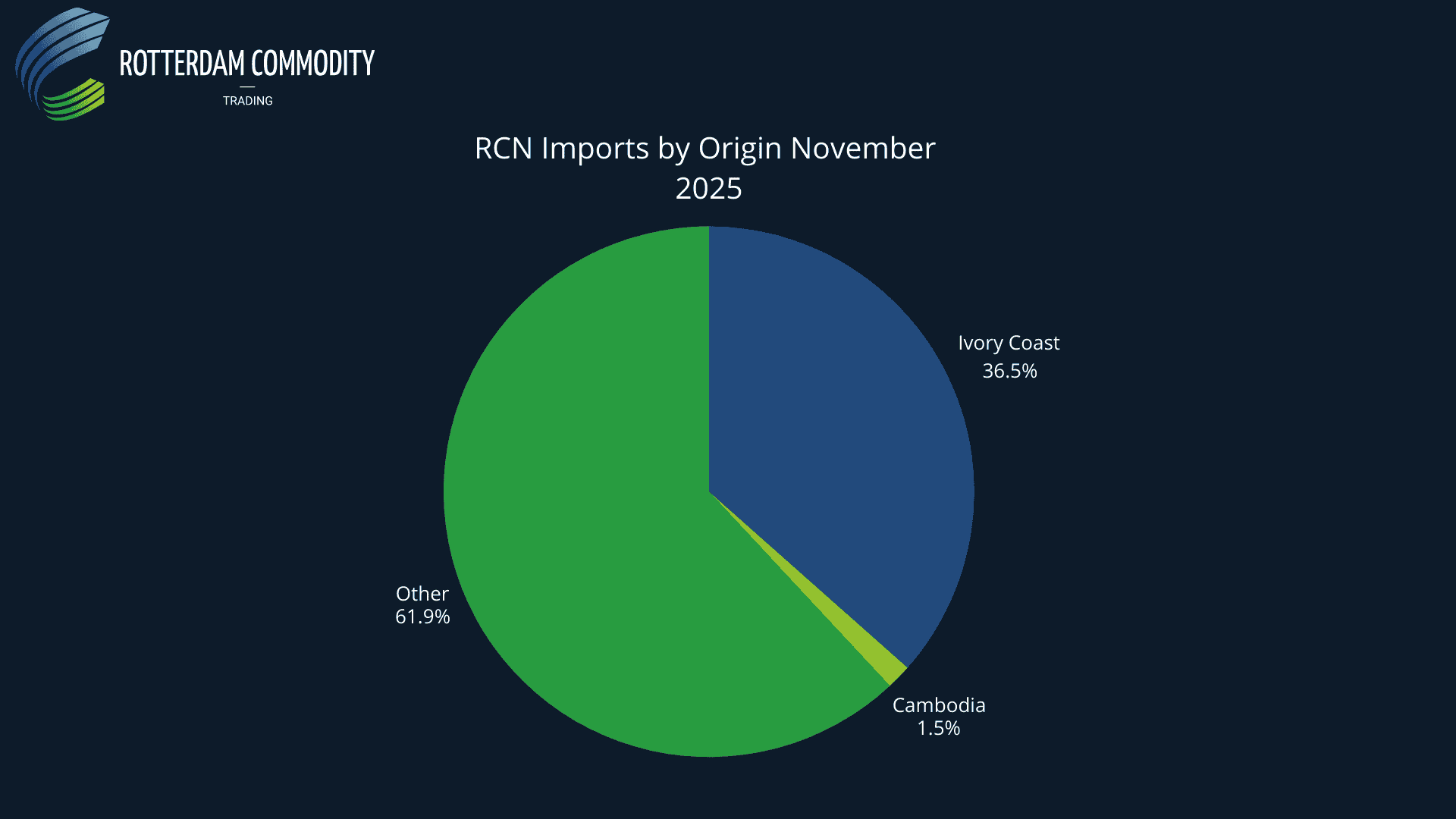
Ivory Coast re-asserted itself as the largest single supplier, shipping 72,761 tons in November, up +129.7% YoY. This follows months of erratic flows caused by export restrictions, delayed inspections, and logistical friction earlier in the year. The late-season rebound suggests that volumes deferred in Q2–Q3 are now clearing, but it does little to restore confidence for 2026, given persistent dryness and tree stress reported across Ivorian cashew regions.
Cambodia, by contrast, remains Vietnam’s most structurally reliable origin. November volumes fell to just 3,031 tons, a seasonally expected slowdown following extremely heavy shipments earlier in the year, as the Cambodian harvest typically concludes by late summer. Year-to-date, Cambodia still accounts for nearly 1.0 million tons of RCN, up 27.6% YoY, reinforcing its role as Vietnam’s primary long-term supply anchor.
The contrast matters: Ivory Coast offers volume spikes, Cambodia offers continuity. Vietnam needs both, and neither is cheap.
Kernel Imports Tell a Story of Selectivity, Not Expansion
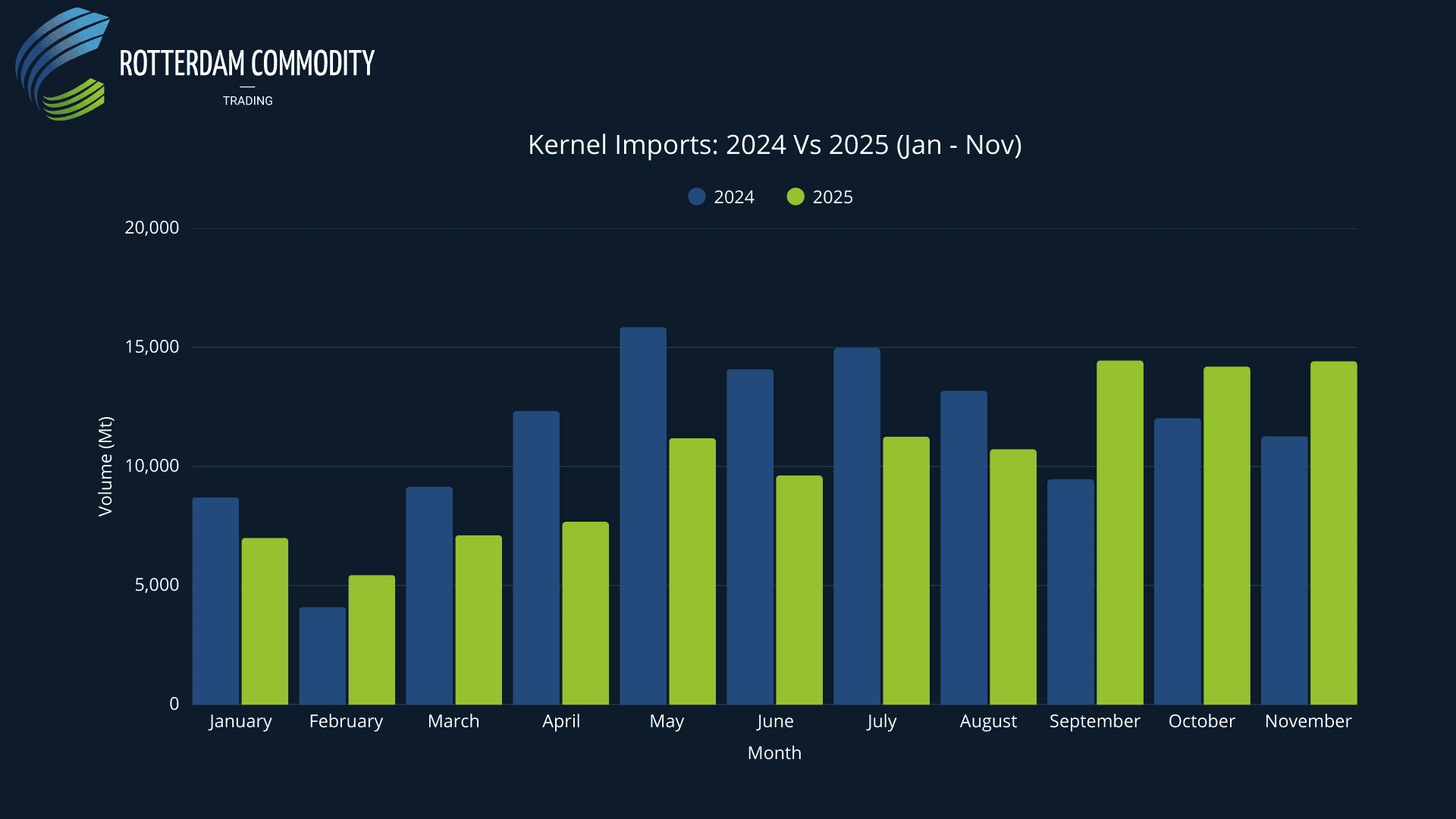
Imported cashew kernels (used for blending, quality correction, or re-export) rose again in November to 14,421 tons, up +27.9% YoY. However, year-to-date kernel imports remain 9.6% below 2024 levels.
This combination, higher prices but lower cumulative volumes, signals restraint rather than aggression. Processors appear focused on specific grades and contracts, not on broad stock-building. Average kernel import prices in November fell to USD 6,089/ton, down 8.8% YoY, suggesting margin pressure is being managed by tighter procurement, not by volume expansion.
Exports Remain Strong, but Margins Are Under Pressure
While export figures remain robust and Vietnam is on track to match or exceed last year’s kernel shipment total, the November data reinforces a critical point: export strength is no longer synonymous with profitability.
Raw material costs have risen faster than kernel prices throughout 2025. Freight, labor, and financing costs remain elevated. The result is a processing sector that must run at high utilization just to defend margins, a risky position if supply tightens or demand softens in early 2026.
China continues to absorb a growing share of Vietnamese exports, offsetting weaker U.S. buying earlier in the year. But this shift also compresses pricing flexibility, as Asian markets remain highly price-sensitive.
What the November Data Is Really Saying
Taken together, the latest VINACAS figures point to a Vietnam cashew industry that is not oversupplied, not relaxed, and not betting on cheaper inputs ahead.
Instead, processors are:
- Securing raw nuts earlier and at higher prices
- Relying heavily on Cambodia while tolerating volatility from West Africa
- Importing kernels selectively to protect contract quality
- Running high throughput to compensate for thinner margins
This is the behavior of a market preparing for risk, not excess.
Why This Matters Going Into 2026
Vietnam’s ability to sustain export volumes into 2026 will depend on three fragile variables:
- Cambodia’s final crop outcome, where acreage is large but yield remains uncertain
- West African production, particularly Ivory Coast, where weather signals remain negative
- Demand resilience in China, now Vietnam’s most important outlet
Any disruption across these pillars would quickly expose how tight the system has become.
The November numbers don’t signal a peak, they signal a market quietly bracing for a more constrained year ahead.
This analysis is based on the latest VINACAS November 2025 import and trade statistics, combined with ongoing market intelligence and seasonal supply monitoring.
👉 For weekly updates on Vietnam, Cambodia, West Africa, and global cashew flows, subscribe to the Weekly Cashew Report.
 We use cookies to ensure you get the best experience on our website. For more information, please read our Privacy Policy.